
• Home

  • Structures

    Liquid Hydrogen Carrier (LHC) Research Hydrides for Activation of Small Molecules Applications of Metal Hydrides Hydrides for Ion Conductions
  • Members

    Director Subgroup Leader Research Staff Administrative and Technical Support Staff Postdoctoral Fellow Graduate Student Alumni
  • Publications

  • Achievements

    Impact and Citation Analytic Research Conversion Award Media
  • Album

  • Join us

  • Download

  • Home
  • Structures
    Liquid Hydrogen Carrier (LHC) Research Hydrides for Activation of Small Molecules Applications of Metal Hydrides Hydrides for Ion Conductions
  • Members
    Director Subgroup Leader Research Staff Administrative and Technical Support Staff Postdoctoral Fellow Graduate Student Alumni
  • Publications
    Highlights Book/Chapter
  • Achievements
    Impact and Citation Analytic Research Conversion Award Media
  • Album
  • Join us
  • Download
Chinese
×
Hydrogen is unique because it is the only element whose three valence states - positive (+1), neutral (0), and negative (-1), are all commonly found in chemical compounds. Among these, hydride ion is the most energetic and reactive, making it the central focus of our center. We are dedicated to uncovering the distinctive properties of hydride materials harnessing them to drive advances in hydrogen storage, ammonia synthesis, and hydride ion conduction.
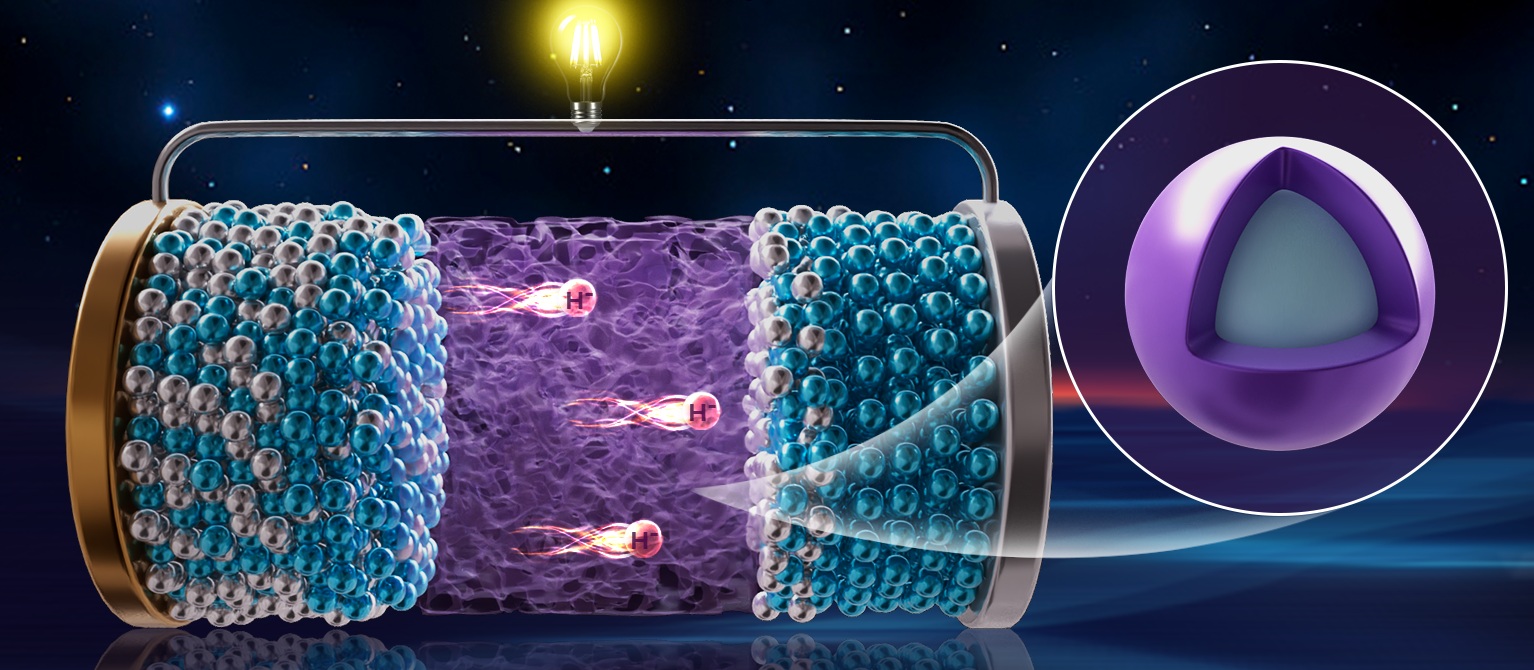
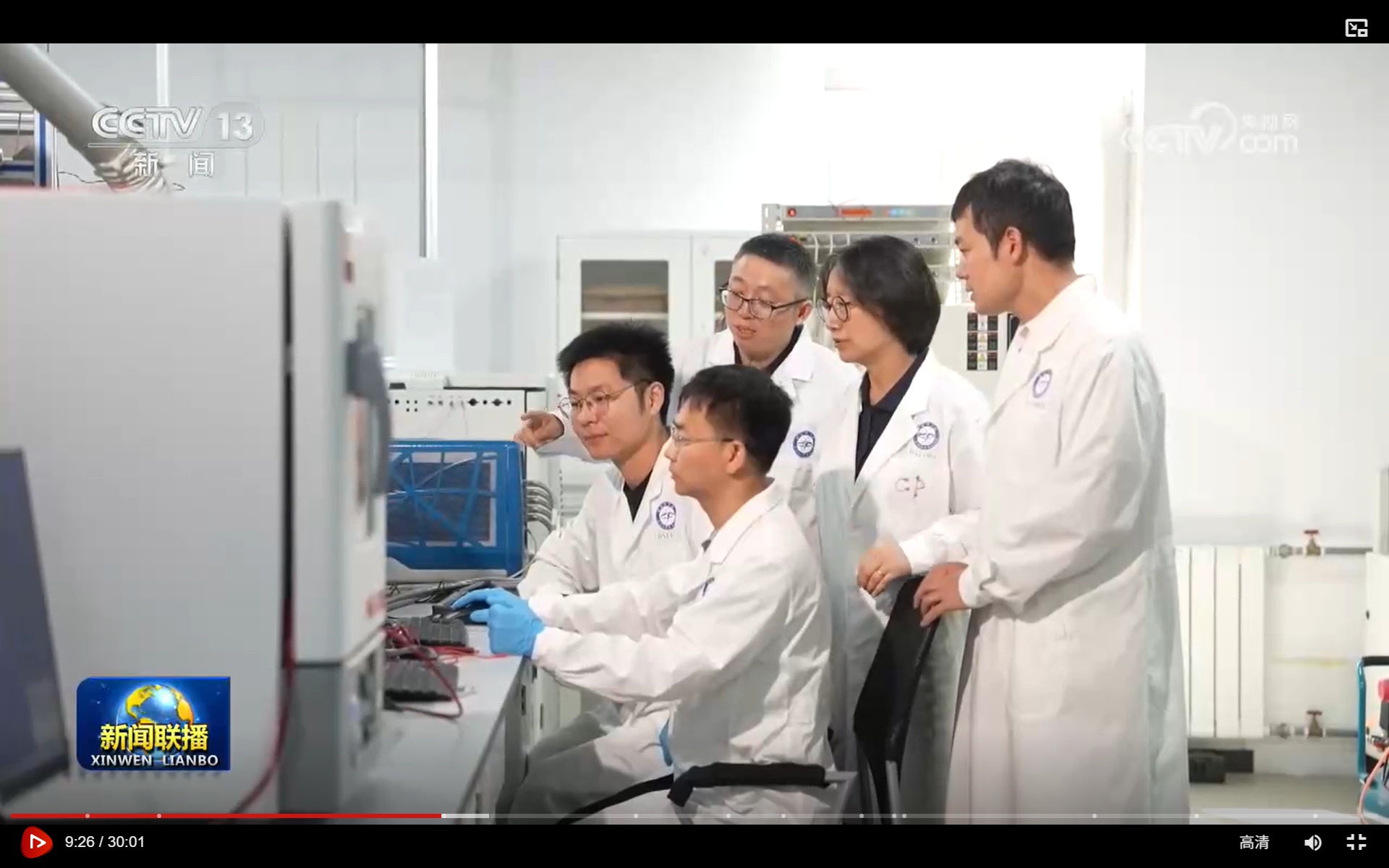
May, 13 2026: Our group developed the first gas-solid hydride ion battery, as officially featured by CCTV 13. This achievement marks a significant breakthrough in the fields of electrochemical energy storage and hydrogen storage technologye, providing a safe, highly efficient alternative to conventional hydrogen storage methods that rely on extreme conditions
Our group has pioneered a hydride ion battery, representing a breakthrough in clean energy storage. Using a novel core-shell electrolyte, the team achieved room-temperature operation, verified by powering an LED. This leap from concept to reality opens new pathways for large-scale energy storage and mobile power, bolstering China's green energy future. (Nature 2025, DOI: 10.1038/s41586-025-09561-3)
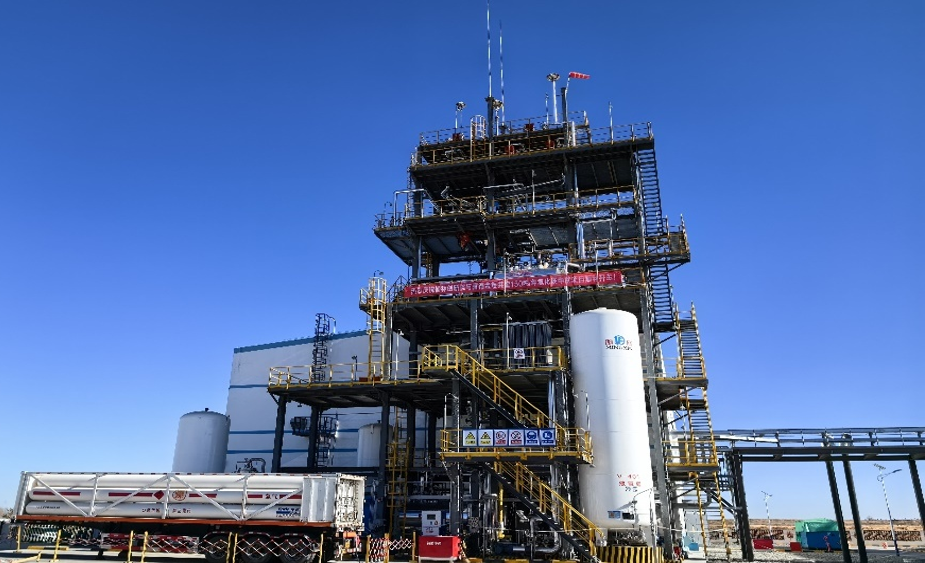
Launched Jan 10, 2025, a 150 t/y MgH₂ pilot plant is now in trials. This joint initiative uses a proprietary one-pot method to produce this key hydrogen storage material, advancing solid-state hydrogen storage for renewable energy integration and the ‘dual carbon’ goal.
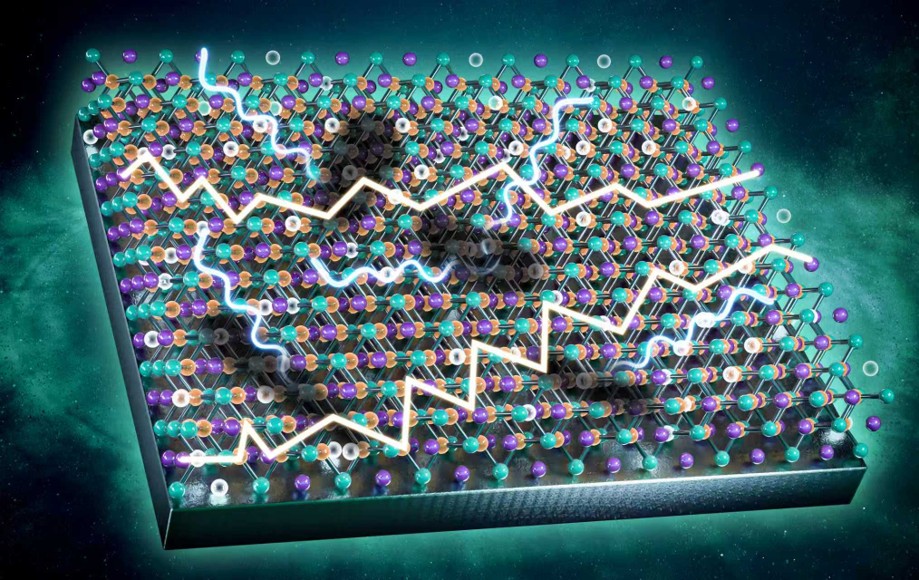
Our group has pioneered the first room-temperature hydride ion battery, a breakthrough in clean energy storage. By engineering a lanthanum hydride material with a nano-grained, defective structure, the team suppressed electron flow by five orders of magnitude while enabling rapid hydride ion movement. This enables a pure ion conductor for a solid-state battery operating from -40°C to 80°C, paving the way for a new class of all-solid-state energy storage devices. (Nature 2023, 10.1038/s41586-023-05815-0)

Highlights

More
  • May 15, 2026

    Our research group gas-solid hydride ion battery has been reported by CCTV and several medias

  • May 14, 2026

    Our research group developed the first gas-solid hydride ion battery for efficient ambient hydrog...

  • May 9, 2026

    Our research group reported a new alkali metal N-heteroarene as luminescent materials

Recent Posts

More
  • Jun 1, 2026

    Our research group developed an efficient Mn-based catalyst for ammonia synthesis

  • May 29, 2026

    Our research group organized patent writing training

  • May 28, 2026

    Ningxia Baofeng Yuneng Technology Co., Ltd. delivered a talk on lithium-ion battery technology

  • May 27, 2026

    Professor Ping Chen delivered her talk during DICP 27th Public Science Day

  • May 15, 2026

    Our research group gas-solid hydride ion battery has been reported by CCTV and several medias.

  • May 14, 2026

    Our research group developed the first gas-solid hydride ion battery for efficient ambient hydrog...

  • Address

    Dalian Institute of Chemical Physics (DICP), Chinese Academy of Sciences No. 568 Lvshun Middle Road, Dalian, Liaoning, China 116023.

  • Contact Number

    +86-411-39787225

  • Postcode

    116023

  • E-Mail

    xiedong@dicp.ac.cn

©Center for Hydride Energy Chemistry

Wechat official account